Showing posts with label Youth. Show all posts

Monday, March 27, 2017

Profiles: Doc Rommel & P3DM… “For the Future of our Communities”

Persevering with P3DM…
“For the Future of our Communities”

(Says the City Veterinarian of Baybay, on DRR and CCA)

P3DM or ‘Participatory 3-Dimensional Mapping’, was one of the output activities of ADB JFPR Grant 9175 Subcomponent C.1 implemented by DILG 8 through a consortium of three consulting firms CONCEP Inc., GEOS Inc., and ASSURE Inc..

Volunteers put finishing touches on Brgy. Pangasugan's 3D Scale Map, their P3DM Workshop Output

Also known as ‘Participatory 3-Dimensional Modeling’ by other organizations or schools of thought, P3DM was part of the grant project’s Participatory Risk Assessment (PRA) methods for mainstreaming Disaster Risk Reduction (DRR) and Climate Change Adaptation (CCA) in development planning of beneficiary local governments. P3DM was introduced to 4 barangays as pilot activities, in the hope that the LGUs would on their own replicate the fun but useful activity in their other barangays. One such pilot barangay was Pangasugan, in the City of Baybay, Leyte.

The quoted title of this article is from/by Dr. Rommel Gonzaga, the Baybay City Veterinarian. He said that at one of the many workshops conducted to capacitate 30 local governments in Region VIII towards mainstreaming DRR and CCA in their Comprehensive Land Use Plans (CLUP) and Comprehensive Development Plans (CDP).

“I am doing this neither for myself nor just for our local government to be compliant on the new DILG requirements. Together with my colleagues, we are doing this for the whole city of Baybay, not only to serve the present population, but for the future of our communities. And I intend to keep doing this worthwhile activity, as long as I can, even if, on my own personal capacity…”

Dr. Rommel Gonzaga DVM (front right), poses with some of the P3DM participants and mentors

Why him, the Vet?
“Doc Rommel”, as he is fondly called by the city’s constituents, is a Veterinarian. “By profession, affiliation and designation”, he laughingly shared with us! Not relegating his official ‘vet’ designation, he is also “officially” and willingly the DRRMO-Designate of Baybay City – a city composed of 92 barangays with a population of more than a hundred thousand, on the western seaboard of the island of Leyte in Eastern Visayas (Region VIII). He is into this because he wants to – even passionate about it!

How did he get involved in DRR, CCA, CLUP and things ‘calamity’? Yolanda. He tells us that the super typhoon changed both his personal and professional attitude towards managing communities...

When super typhoon Yolanda struck Region VIII on November 8, 2013 , I was in Baybay City with my family, but my mother, brother, nephew, sister in-law, and her daughter were at our residence in Tacloban during that time. After the typhoon, I did not worry because it did not cause severe damage to the City of Baybay. The day after, I began to hear disturbing news about what happened in Tacloban. I could not contact my family because there was power outage and no communication signal. It was then when I began to worry and felt nervous.

I decided to check my family and went to Tacloban using a motorbike, since I thought that it might be difficult using a car due to fallen debris on the road. My heart began to sink when I saw the devastation while passing through the towns of Mayorga, Dulag, Tolosa, Tanauan, and Palo. Tears welled up in my eyes thinking about my mom and the rest of the family, and what might have happened to them. I saw dead bodies lining the streets, people walking like zombies, and many were begging for food and water. Everything I saw was chaos and confusion.

Finally, I reached my parents’ house. With knees shaking and terror gripping my heart, I was bracing myself for the worst. Then, I saw my mother, brother, his daughter, sister in law, and my nephew all in good shape. Although visibly shaken, tired and hungry, they were all fine. This was the only time since Mayorga, that I breathed a sigh of relief.

Moving forward, after a year from the disaster, there were questions in my mind. It lingered like the pictures of the dead and the chaos that I saw. Why was the government not able to respond immediately? Why was there no [national] authority present? Why were the people not prepared despite early warning from Pag-asa? Hundreds of questions like jack rabbits running through my head, and I found no answers.

Then the national government began its campaign on the strict implementation of RA 10121 or the Philippine Disaster Risk Reduction and Management Act of 2010. I thought bitterly, the law was passed on 2010 and if it had been seriously implemented, the deaths could have been minimized or avoided…, so recounts Doc Rommel.

Baybay City has not created a DRRM Office nor assigned any personnel. When the City Administrator asked who would like to attend the trainings and seminars on DRRM, Doc Rommel did not hesitate to volunteer. After two years of attending these trainings and seminars, he finally found the answers to his questions. His mind opened up and he deeply appreciated the significance of DRRM in the community. According to Doc Rommel, This was when he found his advocacy and the beginning of a journey to a new future.

Thus, Doc Rommel rightfully represented his city to the series of plenary workshops and mentoring sessions conducted by DILG under the ADB JFPR Grant 9175 fund.


Pangasugan P3DM
Doc Rommel eagerly made possible the conduct of P3DM at Brgy. Pangasugan. When the team of consultants headed by P3DM expert himself Dr. Jake Rom Cadag reached the Brgy., residents readily received them and the 4-day workshop went actively well.

This was attended by a cross-section of the barangay's populace – mothers, fathers, almost all of the senior citizens, teenagers, fisherfolk, farmers, land owners, businessmen, teachers, and about 11 children from various grades who were excused from their classes so they could participate. Even the heads and some staff from the DA’s Agricultural Training Institute Eastern Visayas were there as participants. [ATI holds offices inside Visayas State University campus - a part of Brgy. Pangasugan]


It was repeatedly stressed that the workshop output, the 3D Scale Model of their barangay, will (among many other uses) help everyone to know the physical characteristics of the whole area, so that everyone knows what to do and where to go during emergencies. It also helps anyone to easily identify demographic distribution, vulnerable locations, access points, etc. And they all know what is meant by each map detail or marker, since they are the ones who decided to use such markers.


3D Map done, it is yet compared to the latest in technology - the Project NOAH maps (projected)!


Final 'resting place' of the 3D Map: a glass-top table to serve as the barangay's discussion table

On the last day of the Pangasugan P3DM, where participants (the whole barangay, actually) were to present the final output and share their learnings, Doc Rommel invited Captains from other barangays. Two of them came. And, during that closing ceremony, where Pangasugan Brgy. Captain Dexter Magan gamely served lunch with wild boar and frog delicacies of the place, the two visiting/observing barangay captains signified, that they too, would like Doc Rommel to conduct P3DM in their respective barangays.


It happened, and it’s still happening!
True to his word, coupled with interest from other barangays on P3DM, Doc Rommel has since been conducting P3DM at other barangays, and still counting. P3DM was already conducted at Brgy. Sta. Cruz, Brgy. Balao, Brgy, Pomponan, Brgy. Makinhas. Others more have been scheduled or are trying to secure a schedule with Doc Rommel, especially during the summer vacation months where children and their teachers will be available en masse!


One interesting twist that these worthwhile activities are bringing to the city is an unintended increase in knowledge-sharing and camaraderie amongst barangay officials and residents - especially adjacent barangays where upstream & downstream collaboration is crucial. Those who have already done P3DM in their barangays willingly go with Doc Rommel to assist him when conducting it at the next barangays. The city now targets 100% of barangays to do this activity.


Spreading P3DM
Another good news is that, the Agricultural Training Institute (ATI) with its Regional Director Dr. Vilma Patindol who participated and saw the P3DM output of Brgy. Pangasugan, appreciated the importance of the map, not only on DRR but as well on agricultural aspects. They allocated part of their 2017 training budget for the conduct of P3DM in the entire Region VIII with the help and active support of Doc Rommel!


Beyond P3DM
Unknown to many, the dear city vet is actually also busy with other DRR/CCA-related activities of and for the city. He leads the conduct of Pre-Disaster Risk Assessment Activities (PDRA), Barangay DRRM Planning and Budgeting, Contingency Planning (CP), Incident Command System (ICS) trainings, Barangay Emergency Response Trainings, Establishment of Early Warning System or EWS, Rescue Trainings and Basic Life Support (BLS), Conducts lectures on DRR in schools and universities, Rapid Damage Assessment and Needs Analysis (RDNA) training, DRR trainings of CSOs and volunteer groups and much more. To achieve all these, he actively coordinates with agencies, organizations and iNGOs to help him help his city in terms of disaster preparedness and resilience.

Being the “DRRMO – Designate”, he does not stop his yearning to learn more so he can help his city. He is already a graduate of All Hazard Incident Management (AHIM) and a member of the Incident Management Team (IMT) of the Office of Civil Defense (OCD). His first disaster deployment was in 2015 when Typhoon Nona hit hard on Northern Samar. He also heads the district 5 DRRM cluster which includes the Municipalities of Mahaplag, Hindang, Hilongos, Bato, and Matalom. He created and now leads the Baybay Emergency Response Unit (BERU) where volunteers have been and are being trained in various emergency incidents. Baybay City being a coastal settlement, with one of the tallest mountain ranges behind it, his city has to be prepared to all kinds of scenarios. Check-out his facebook posts! They have had fire-drills, WASAR, night mountain rescue, shake drills, cave/underground rescue and so on!


Ending our conversation, Doc Rommel expressed his gratitude to a lot of agencies, organizations, CSOs and iNGOs, especially ADB JFPR for opportunities to further equip him with DRR/CCA matters. But we do thank him for the unwavering dedication and real drive to help his city.

He does have other more intimate matters to attend to everyday. Doc Rommel, now 45 years old is married to Cristy Esparaguera a beautiful Samarnon who runs her own online business. They are blessed with three children, two daughters and one son. The family loves to travel with swimming and snorkeling as their fondest activity. At times, these bonding moments have to be put on hold, in favor of the many roles Doc Rommel have to attend to.

Our hats off to you Doc Rommel!


Share:

Thursday, November 10, 2016

Investing in skills FOR youth

By Karen Joy Alcober, Communication Officer, Plan Int'l

“When I graduated high school in 2015, I knew I wouldn’t enter college because my mother could not afford to put me in school. I applied for a scholarship but I did not pass the exam,”
shares Victor, 19, from Samar.

Victor’s family could not afford to support his education. They lost their livelihood after Typhoon Haiyan in 2013. Unable to enter college, he tried to look for a job to support his brothers' and sisters’ education. But with no work experience and a high school diploma, he knew it would be difficult for him to find a decent work.

Victor’s story is the story of thousands of youth in the disaster-affected region and thousands more across the country.

untapped ASSET
According to the 2016 Labor Force Survey, the national unemployment rate is estimated at 6.1%. Of the total unemployed, half are from the age group 15 to 24 years old. Government data also shows that majority of the unemployed youth have not reached college.

It’s a challenge for disadvantaged youth to find decent work as many employers seek college graduates.

There is also a growing mismatch in the supply of graduates and the demand for skills. Many training courses are not linked to in-demand apprenticeship opportunities, resulting to trainees having lesser chances of employment. According to government data, only 10 out of 1,000 applicants are hired because they do not have the skills needed in the market.

A recent market study in Eastern Visayas commissioned by Asian Development Bank’s Japan Fund for Poverty Reduction shows also that high unemployment remains among youth coming from poor households.

Youth employment through skills based training
To address youth unemployment, Plan International works closely with the government through its Technical Vocational Education and Training (TVET) to promote economic empowerment of the youth and communities in difficult situations and ensure their financial stability and security when crisis strikes.

In partnership with the Technical Education and Skills Development Authority (TESDA) and various funding partners, Plan International facilitated the training of more than 3,000 youth on welding, housekeeping, food and beverage servicing, food processing, computer hardware servicing, carpentry, electrical installation and maintenance, automotive and small engines servicing, and other in-demand skills. On top of that, all youth beneficiaries also received life skills trainings on financial literacy, digital literacy, family planning, safe migration, and disability inclusion awareness to enhance their employability.

Through this initiative, Victor has found employment as a mechanic.

“When I graduated high school in 2015, I never imagined I’d find myself a job a year after,” says Victor, who received training on Automotive Servicing and passed the national certification.

His training was funded by the government of Japan through the Asian Development Bank’s Japan Fund for Poverty Reduction.

Victor’s story of finding decent work through TVET is considered a success, but many are not as fortunate as him.

Second class citizens?
“In the Philippines, TVET graduates are considered as second class citizens. Our society gives higher value to degree holders,” says Cleta Omega, regional director of TESDA in Eastern Visayas.

“We must change this. There must be a paradigm shift,” she adds.

According to Ms. Omega, there is still limited awareness and appreciation of the real value of technical skills education. Many youth still think that TVET is not a legitimate track to take, while some employers are hesitant to employ TVET graduates. Even youth with national certification for their skills still have difficulty finding decent work.

In a conference with the business sector last September, Plan International and TESDA officials talked to attendees about the stigma on TVET and called for a change of mind.

“There should be more investments in corporate citizenship, including partnership with civil society and close collaboration with government agencies working on the supply side to address employment issues moving forward,” says Peter Bellen, Plan International Asia’s Youth Employment Solutions Advisor.

“Companies and business groups should also look into unemployed youth as potential customers and clients. The youth will comprise the majority of consumers in the next 10-20 years, and if these unemployed youth get into decent wage or self-employment, they will have the resources to purchase goods and services,” he continues.


Share:

Tuesday, June 14, 2016

Young woman dreams to be a police officer, for family, community


"If I weren't able to enroll in college last year, maybe I would have committed suicide," recounts 20-year old Ivy from Balangiga, Eastern Samar.

Looking back to 2015, Ivy recalled the challenges her family went through on her last year in college--the uncertainty for her to finish college.

Not meeting the minimum required grades, she transferred from a state-funded to a private college in the city. From Php 7,000 per semester, her tuition fee spiked to more than its double.

Her father, a motorcycle driver, and her mother, who maintains their sari-sari store, barely made ends meet for their family of five. They could not afford a private-school education for Ivy.

Her parents suggested for Ivy to stop. She understood her family's situation, but she could not give up her dream to finish her education. There were only two semesters left.

In Ivy's family, no one has ever graduated college. Her older brother reached college but did not finish a semester. In her barangay with a population of 426 according to 2015 Census of Population, only a handful have finished college.

"I had to enrol. I want to set an example to my sisters, my cousins and my community. I want to show them that I finished college despite the difficulties. And if I can do it, so can they."


Her parents understood why Ivy was persistent. Even if it meant being in debt, they found a way to support her first semester.

Even if she adjusted living in the city and away from family, she endured with the goal of receiving a diploma in mind.

Every time she went home, she felt even more motivated because of overwhelming support of her community. Some neighbours would help her with her home works.

Second semester came. But supporting her education remained to be a challenge.

When their family was identified to be part of the cash-for-work programme under Asian Development Bank's-Japan Fund for Poverty Reduction Grant 9175 Subcomponent A2 grant, her parents knew it was exactly the kind of support they need.

Through the programme, her father rendered service
 for Php260/day, an amount hard to get by as a motorcycle driver. For 30 days, he assisted with the rehabilitation of their barangay's water system and earned a total of Php 7,800.

They used it to pay for Ivy's tuition for her last semester.

And as graduation came closer, she found a deeper appreciation of her degree.

"Before I just wanted a diploma. But transferring to a new school and knowing the sacrifices of my family made dream more. I realized that I didn't just want to graduate. I want to pass the board exam and become a police woman."

With new goals in mind, she studied hard on her last semester.

Then the fateful day of her graduation came. Ivy received flowers from the school, she gave it to her mother and said, "This is for you." Holding back her tears, her mother accepted feeling fulfilled.

"Through the cash-for-work programme, Ivy graduated," says her mother Rose.


In college, she learned the value of protecting others. Now, as a Criminology graduate, people look up to her.

"I know people will approach me in case of emergencies."

To develop her skills, she participated to the first batch of the Emergency Response Team (ERT) training facilitated by the Eastern Samar Emergency Response Search Rescue team of Eastern Samar Disaster Risk Reduction and Management Office.

She learned emergency management, first aid, basic life support and water search and rescue. Eager to keep on learning, she volunteered to be a co-trainer for the 2nd batch of the ERT training.

"Being part of the training as a participant and a co-trainer helped me improve my skills as a responder," she shares.

The ERT training aims to increase the capacity of communities against disasters and calamities through skills development. It is under the Disaster Risk Reduction component of the grant.

She is now preparing for the Criminology board exam scheduled on September. She is equally nervous and excited.

"When I become a police woman, I want to be assigned in the field. I want to help my family, my relatives, and my village and to be of service of others," she says.

With that in mind, she is more committed to reach her dream not only because her family is supporting her. The whole village is cheering her on
.
 

Looking back to 2015, she knows the challenges in her life made her the stronger woman she is today. Looking back, she smiles. After all, there are so many things in life worth smiling for--worth living for.


Facebook
Twitter
Website


Should you have any suggestions and stories to share,
Share:

Saturday, September 12, 2015

11 Scholars Graduated from KEITECH

The News:
Eleven 'Out of School Youth' from Yolanda-hit areas in Leyte and Samar that Plan International sent to a 3-month live-in schooling at Kananga-EDC Institute of Technology (KEITECH) funded by the ADB JFPR Grant 9175, were recently graduated from their respective courses, are now all TESDA NC II certified, and ready for employment here or abroad, or ready to embark on their own businesses.
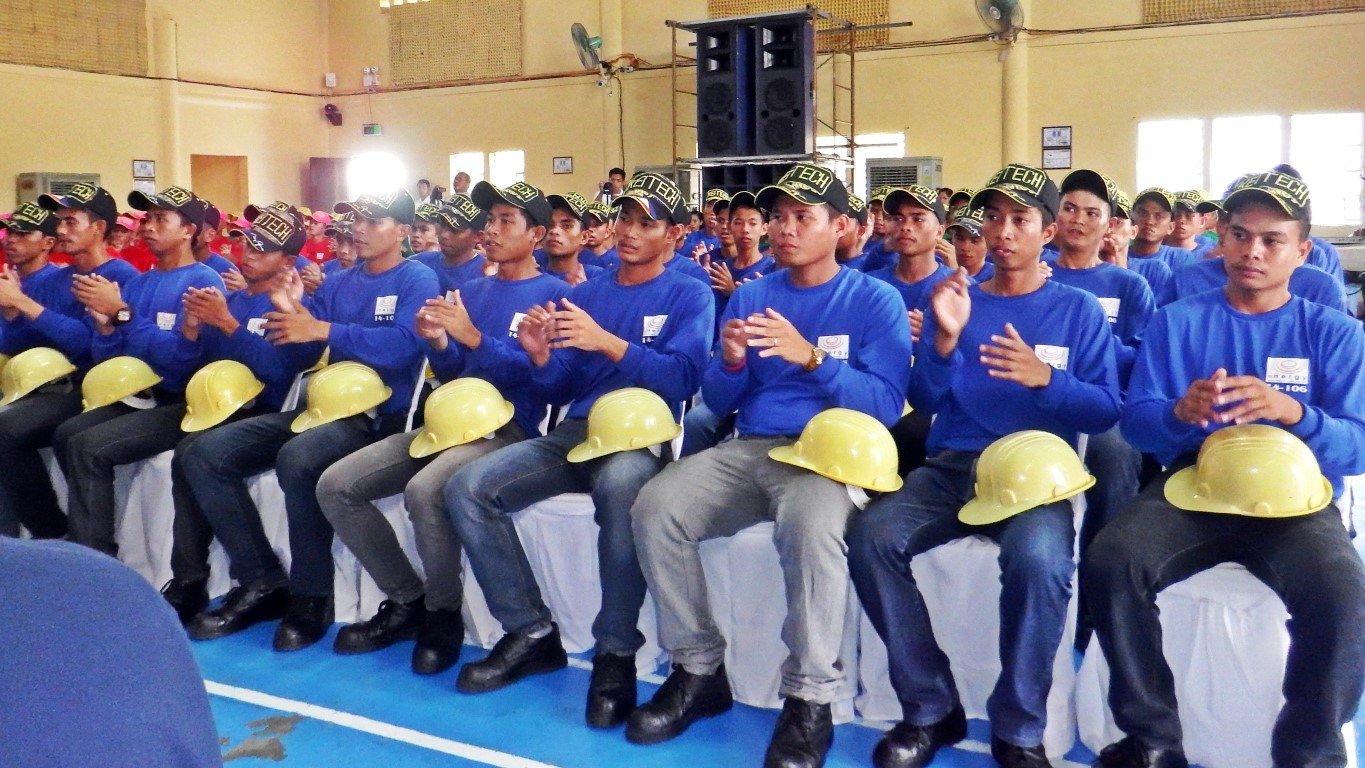
Graduates (L-R): Randolph Soriano (Salvacion, Dulag, Leyte), Joel Calupas (Salvacion, Dulag, Leyte), Lindsey Cajandoc (Calsadahay, Buaruen, Leyte), Jovan Gara (Calsadahay, Burauen, Leyte), Michael Angelo Vertulfo (Salvacion, Dulag, Leyte), Alvin Batis (Cacao, Kananga, Leyte), Joselito Dagsa (Suluan Island, Guiuan, Eastern Samar), Neil Justine Floria (Inapulangan, Homonhon Island, Guiuan, Eastern Samar), Leon Galecia (Cacao, Kananga, Leyte), Nikko Badanoy (Suluan Island, Guiuan, Eastern Samar), Dickson Ogario (Cansumangkay, Balangiga, Eastern Samar). Boys in red shirts took up Electrical Installation & Maintenance (EIM). Boys in blue shirts took up Carpentry. All also received English Proficiency Certification
o-o-o-o-o


The 'Longer & Better' Story:
You will remember these boys from a previous article. That article said we sent seventeen, but only 11 here graduated, hmm. Where went the others? What happened? Nothing to worry, they transferred to BCAT for other courses not offered by KEITECH. But that's another story for a later telling, let's get back to this "graduation"!


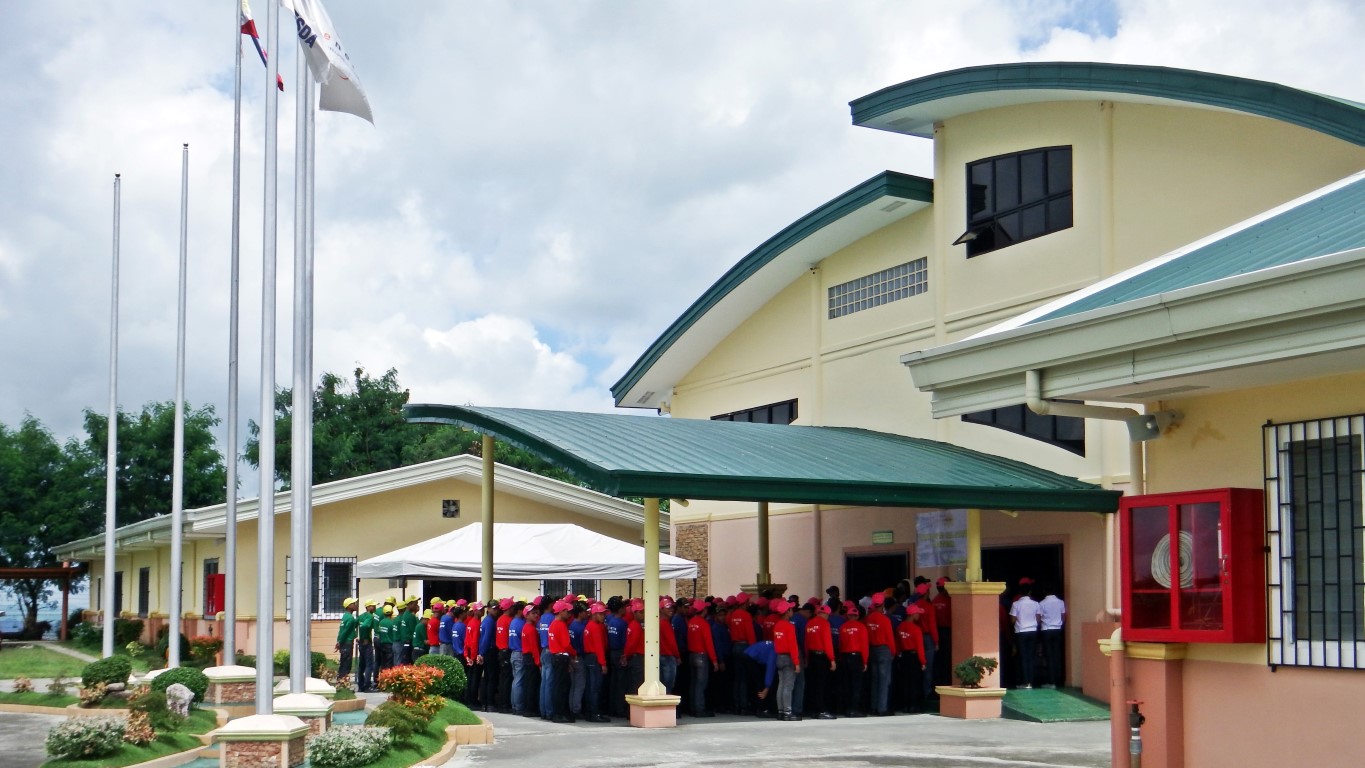
Very early today (12SEP2015), Plan Int'l staff from as far as Guiuan and ADB EMY/GMU from Tacloban were on an excited run to the KEITECH Campus in Kananga, to witness their 6th Commencement Exercises. Why so? Because, 11 of the 182 graduates were Plan International Scholars funded under the ADB JFPR Grant 9175. We were there to witness the graduation rites of the 11 kids (in behalf of their families) and bring them back to their communities immediately after the ceremonies!


How did it go? Not quite like your usual high school or college graduation. Only a handful (3 or 4) of the 182 graduates had family members in attendance. But the ceremonies were so prompt and precise, almost like how it goes at military academies!


Once the guests (very few of us) were settled, the program started with a discussion of the venue's emergency evacuation procedures (in case something happens during the ceremonies). Oh ha?! Where else do you see such a 'preliminary', right?


Then... the 'Graduation March'(this is a video, click to play)
Entrance of 182 graduates followed by a reverberating singing of the national anthem.


Kananga's Mayor Codilla formally welcomed everyone. He even described KEITECH, its purpose, facilities and management - with a lot of thanks to the family behind EDC (Energy Development Corporation)


The handful of guests eagerly listened. Thank you Mayor Elmer, we learned more today!


Dr. Emil Saceda (KEITECH Administrator) presented the candidates for graduation.
And readily confirmed/conferred by TESDA Leyte Provincial Director Loreta Banario.


Then the boys (rightfully) changed their baseball caps with those yellow helmets!
Henceforth, we call them TESDA Certified Professionals!


Graduates received their certificates from Saceda, Banario, TESDA Region VII Director Cleta Omega, Ormoc Mayor Edward Codilla (the younger brod, Kananga Mayor Elmer excused himself for another engagement), EDC President Paul Aquino and Leyte Vice Governor Carlo Loreto


The Leyte Vice Governor congratulated the 182 graduates for maintaining the KEITECH record of 100% of its graduates passing their respective TESDA Certification Exams. Then made a roll-call per municipality, asking graduates to stand and be recognized, afterwhich he inspired them to be part of The World's Greatest Nation Builders.


Dir. Omega, in her message added a reminder, that their English Proficiency Certificates would get them competitively going at industries in other countries.


Guests wondered why the boys, in military fashion, quickly brought their chairs to a stack on one side of the building, but were merrily surprised when they finally did their Graduation Song (and Dance) to the tune of "I Will Survive". Exemplary performance!

Here's a back view video of their perforance c/o Anna:
There is even another video at this FB Link from Jayson


KEITECH even has a 'mandatory' pictorial session! And our cameras gladly obliged!


End of story? Naaah, not yet...

There was lunch, catered by no less than that famed Ormoc resto called Sutuwaki!

Plus...

We gathered our 11 graduates for some tete-a-tete and banter, and to personally congratulate them for having 'survived' the rigid 3-month course (one almost gave up)!


Posterity shots, of course... and On the stage!


Waiting for their ride, the boys were still able to sing with their teachers KTV-style! Dickson, the batch's 'cry-baby' belted out a number of songs!


Final 'quo vadis' discussion... 2 of these boys will be back here in a week's time!
How's that? KEITECH will take them back in for a 2nd course, if endorsed by their respective municipality's PESO! Not anymore as Plan/ADB Scholars but care of EDC.


And a (not so final) group pose w/ Plan Int'l and ADB folks...


'Byebye KEITECH' time..


Van on the left goes to Leyte towns, van on the right to Eastern Samar towns...


Ayan, sabi na nga hindi pa final yung picture sa taas eh!


Leyte-Samar Networking! These boys have mended camaraderies during their stint...
Staying in-touch! Who knows... they could soon become business associates, right?


Well, what a fun and fulfilling day!


Share: